
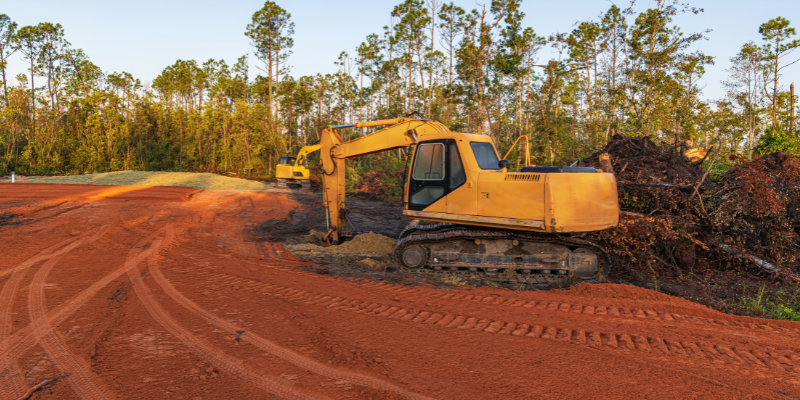
Building a home on vacant land in Texas involves more than construction costs, and preparing your lot is one of the first major expenses to understand. Buying raw land to build your dream home in Texas sounds romantic until a contractor hands you an estimate you weren’t expecting. Many buyers carefully budget for the foundation, framing, and kitchen cabinets, only to be caught off guard when land clearing costs as much as a used truck. That gap between planned and actual expenses is where many new-build budgets fall apart.
How Much Does Land Clearing Cost in Texas?
The number most buyers plug into their spreadsheet is somewhere around $1,500 per acre. Then they find out their property is covered in cedar, mesquite, and mature oaks, and suddenly that estimate doubles. Land clearing in Texas runs from $1,500 to $8,000 per acre, with light brush clearing averaging $1,500 to $3,000, medium vegetation landing at $3,000 to $5,000, and heavy woods with large trees climbing to $5,000 and beyond. A four-figure swing per acre means that on a 3-acre build site, you’re potentially looking at a $10,000 difference just based on what’s growing.
I worked with the Beckett family in New Braunfels last fall. They’d purchased a wooded lot off FM 306, expecting a quick clearing before their builder got started. The property had mature live oaks, thick cedar, and a limestone-heavy slope in the back. What they budgeted and what they actually paid were two very different numbers, a gap that often widens once equipment hits rocky ground. We helped them understand the full picture before they committed to a contractor. If a similar situation has you rethinking your own build, cash land buyers in New Braunfels can make a fair offer on the lot as-is.
Average land-clearing costs in Texas are around $4,000 per acre, notably higher than the national midpoint. Urban sprawl in the Dallas-Fort Worth Metroplex and Houston’s dense East Texas-adjacent lots both push the market above what you’d pay in, say, central Kansas. If you own land near established neighborhoods and need contractors who carry proper liability coverage, costs reflect that too (insured crews aren’t cheap to field). One thing people consistently underestimate: getting the land build-ready isn’t just clearing. Grading, stump removal, and debris hauling all stack on top of the base clearing price.
If the cost of clearing a heavily wooded lot makes your project less practical, We Buy Land Quick can provide a fair cash offer for your land as-is, so you can sell without paying for land clearing, grading, or other site preparation expenses.
What Affects Land Clearing Prices Per Acre in Texas?
Contractors price around three main variables: what’s growing, how steep it is, and how far they have to haul equipment. A flat lot covered in small brush in Pflugerville is going to run far cheaper than a sloped, wooded parcel outside of Bastrop. Urban areas like Houston and Dallas face higher demand and stricter local regulations, which can push land-clearing costs up by 20 to 30 percent compared to rural Texas rates (permitting alone can add weeks). If clearing costs exceed your budget, cash land buyers in Texas purchase vacant land as-is, allowing owners to sell without paying for site preparation.
Root systems are another major cost driver that gets glossed over. Cedar and oak both spread wide, shallow root networks, complicating foundation site prep. After the trees are gone, you’re still paying to grind stumps and address root mass before a slab can go down. Add $200 to $500 per large tree stump (cedar stumps run toward the high end), and that math gets uncomfortable fast on a heavily wooded lot.
Permits for land clearing vary by location across Texas, with fees generally running from $50 to $500 depending on scope. Properties near waterways, wetlands, or areas with protected species can incur additional environmental compliance costs of several hundred dollars.
Lot access matters too. Remote properties where a skid steer or dozer has to be trucked in from a distance carry mobilization fees that don’t show up on the per-acre quote. Large rocks, existing fences, old foundations, and buried debris can also increase labor and equipment time, adding unexpected costs once clearing begins.
Land Clearing Costs by Vegetation Type and Terrain
Booking a contractor before you know your vegetation type is one of the most expensive mistakes a Texas property buyer can make. Crews show up, survey three acres of mature post oak, and your original quote becomes a memory. Light brush clearing averages $1,500 to $3,000 per acre, medium mixed brush runs considerably more, and heavy woods packed with large trees can top $8,000 per acre. Those aren’t arbitrary tiers. They reflect real differences in hours, fuel, and equipment wear.
Cedar is everywhere in the Texas Hill Country, and it’s sneaky. Small in diameter but extraordinarily dense when grown unmanaged for a decade, it clogs a forestry mulcher faster than most operators expect. Same story with mesquite in West Texas; the root system goes down six feet before the trunk gets interesting (and that’s just what’s visible). Both vegetation types push you toward the higher end of any price tier.
Terrain adds another layer. A lot with a significant grade change toward the back, common on limestone-heavy Hill Country properties, slows a dozer and creates erosion risk during the clearing process. Grade leveling typically runs $1,000 to $3,000 per acre and plays a direct role in preventing erosion and ensuring a stable foundation. Skip the grading, and your pad site may shift in the first wet season.
Sandy East Texas soils clear more quickly but can erode badly once vegetation is stripped, so smart contractors factor in erosion control from day one. That’s why two properties with the same acreage can have dramatically different clearing costs depending on vegetation density, terrain, soil conditions, and the amount of site preparation required.
Best Equipment Used for Land Clearing and What It Costs
A property owner in Wimberley called me on a Saturday, asking why one contractor’s offer came in at $3,900 and another came in at $9,000 for the same two acres. The difference wasn’t effort. It was equipment. The forestry mulcher is the tool driving most residential land clearing projects in Texas right now. A forestry mulcher with an operator costs $1,000 to $2,200 per day, while a bulldozer or excavator with an operator runs $1,200 to $2,500 per day and removes material, including roots, below the soil surface (which matters when you’re prepping for a foundation).
A skid steer forestry mulcher can process one to three acres per day, while larger tractor-mounted mulchers can cover up to 15 acres in a day. That production rate gap explains much of why offers vary so widely. A contractor running an undersized skid steer on a 5-acre wooded lot is billing more hours than one who shows up with a full-size tracked mulcher, which means you’re paying for the equipment mismatch, not extra work.
Bulldozers are still the right tool when you need deep root removal before a slab pour, or when you’re grading a pad site at the same time. For lots where construction starts immediately after clearing, a dozer pass often makes more sense than mulching alone.
Forestry mulching runs significantly cheaper than traditional dozer clearing because there’s no separate hauling or disposal step. The mulch stays on site, controls erosion, and feeds back into the soil, giving you a soil amendment included in the clearing price. For a build site where you’re grading months later anyway, that’s usually the smarter call. If clearing costs outweigh your plans, a company that buys land in Dallas and other Texas cities can purchase your property as-is without requiring any land preparation.
Texas Regional Price Differences: What You Pay Depends on Where You Are

Southeast Texas, covering the Houston-area corridor, typically runs $1,800 to $4,800 per acre, driven by dense pine forests, clay-heavy soils, and tighter environmental rules around waterways. Woodlands-area lots routinely hit the high end of that range because mature tree density and a more competitive contractor market push crews to charge accordingly.
Dallas-Fort Worth has followed a different path. Lots out in Celina, Prosper, or Justin are mostly flat prairie with moderate brush, which puts clearing costs at the lower-to-mid tier more often than not. Still, booming construction demand keeps contractor schedules tight, and that scarcity shows up in pricing sooner than sellers expect.
Hill Country properties near Kerrville, Marble Falls, or Fredericksburg often carry the highest per-acre clearing costs in the state. The combination of rock, cedar, live oak, and uneven topography means more equipment hours, more blades replaced, and more site prep before a foundation crew can even be scheduled. Budget closer to $5,000 to $6,000 per acre if your lot fits that description (and many do).
West Texas is the exception where costs can drop. Open rangeland around Midland or Odessa has lighter vegetation and easier terrain, so clearing a brushy parcel out there might cost $1,500 to $2,500 per acre. The trade-off is contractor availability, because fewer crews operate in remote West Texas counties (scheduling lead times stretch out quickly).
Professional Land Clearing vs. DIY: Which One Saves You Money?
For years, my assumption was that a motivated landowner with a rented machine could save real money on a small lot. Most of the time, that turned out not to be true. Homeowners renting compact equipment spend around $300 to $1,000 per day on machinery alone, before fuel, trailer rental, and the steep learning curve of operating a skid steer on uneven ground. An experienced operator clears in four hours what a first-timer clears in two days.
Consider a one-acre wooded lot with cedar and scattered oaks. A pro with a tracked forestry mulcher finishes it in half a day. You are on a rented skid steer, take two to three full days, and still leave stumps and root mass that the builder can’t work around. Reputable Texas contractors carry general liability insurance, since coverage requirements vary by city and there is no single statewide minimum, and that coverage protects you if something goes wrong near a property line, a utility easement, or a neighboring fence. A DIY job carries none of that protection, and in suburban areas like North Austin or Katy, where lots sit close together, that exposure is real.
DIY land clearing only makes sense when you have existing equipment, real experience operating it, and a property with light brush rather than mature trees. In any other scenario, pay the professional. Even if the upfront quote seems higher, professional land clearing often costs less overall once you factor in equipment rental, cleanup, potential property damage, and the value of your own time.
If the cost of clearing your land makes selling a better option, contact us for a fair cash offer. We buy land in any condition, so you can sell as-is without paying for expensive land clearing or site preparation.
How to Find the Right Land Clearing Contractor in Texas
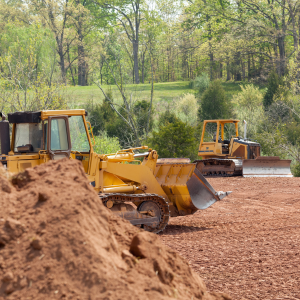
Most property owners check contractor insurance at the end of the hiring process. It should be the first thing you confirm, not the last. Texas doesn’t issue a general contractor license, so ask any land-clearing contractor for proof of general liability insurance directly, since not every crew operating out of a pickup truck in a rural county carries it. Ask for a certificate of insurance before any conversation takes place. A reputable contractor produces one in minutes. Hesitation or excuses are a firm no.
Get three offers, and make sure each contractor walks the actual property first. A quote given over the phone or from satellite images alone is a placeholder, not a price. Any contractor quoting from a distance without a site visit is either padding the estimate or guessing, and I’ve never seen that work out in the buyer’s favor.
Carlos Kim owned a 4-acre lot in Magnolia, northwest of Houston, that had sat uncleared for over a decade. He’d found a contractor through a friend who offered a low number over text, no site visit. That contractor showed up, started cutting, and ran into a drainage easement he hadn’t accounted for. The project stopped, a revised offer came in 40 percent higher, and Carlos ended up back at square one.
Ask any contractor for local references, specifically recent Texas projects. Hill Country cedar clearing and piney woods clearing in East Texas require different techniques, and a crew that mostly works around Dallas may not be the best fit for a Uvalde County lot.
Land clearing is one of the first major investments you’ll make when preparing a property for construction, and understanding the factors that drive costs can help you avoid expensive surprises. From vegetation density and terrain to equipment choices and regional pricing, every property presents a different budget. Taking the time to get accurate on-site estimates and plan for the full scope of site preparation puts you in a much stronger position before construction begins. Whether you’re building your dream home, investing in land, or deciding if selling makes more financial sense, knowing the true cost of clearing your property is the first step toward making an informed decision.
Frequently Asked Questions
How Much Does It Cost to Clear 2 Acres of Land in Texas?
A 2-acre parcel with light to medium vegetation in Texas typically runs between $3,000 and $10,000 total, depending on tree density, terrain, and the clearing method used. Properties with mature trees, rocky ground, or steep slopes will push toward the upper end of that range. Getting at least two on-site offers before committing gives you the best chance of a fair price.
How Much Is 1,000 Acres Worth in Texas?
Texas land values vary widely by region. Rural ranch land in West Texas can trade for under $2,000 per acre, while agricultural ground near San Antonio or in the Hill Country often fetches $5,000 to $10,000 per acre or more. A 1,000-acre tract could reasonably range from $2 million to well over $10 million, depending on water rights, improvements, location, and current market conditions.
Do You Need a Permit to Clear Land in Texas?
Texas doesn’t require a blanket statewide permit for basic land clearing, but local municipalities, counties, and HOAs often have their own rules. Properties near waterways, wetlands, or areas with protected species may trigger state or federal environmental review requirements. Always check with your county’s development office and the Texas Commission on Environmental Quality before breaking ground, especially if water drains across the parcel.
If you own raw land in Texas and you’re weighing whether to clear it and build, sell it as-is, or explore other options, We Buy Land Quick is here to help. We’re happy to talk through the numbers with you. No pitch, no pressure. Reach out to the team at (469) 529-7977 whenever you’re ready, and we’ll give you a straight answer on what makes the most sense for your situation.
Helpful Texas Blog Articles
- Selling A Part Of Your Land in Texas
- Can You Subdivide Land in Texas?
- Understanding Taxes on Selling Land in Texas
- Can I Sell Land to the City or County in Texas?
- Best Sites to List Land for Sale in Texas
- How to Sell Land with a Lien in Texas
- Do You Need Title Insurance When Selling Land in Texas?
- How to Negotiate Land Prices with Buyers
- Environmental Restrictions to Know Before Selling Land
- How To Sell Mineral Rights in Texas
- Sell Commercial Land in Texas
- How Much is Land Worth Per Acre in Texas
- How to Get a Land Appraisal in Texas?
- Land Clearing Costs in Texas
- Quitclaim Deed for Land in Texas